
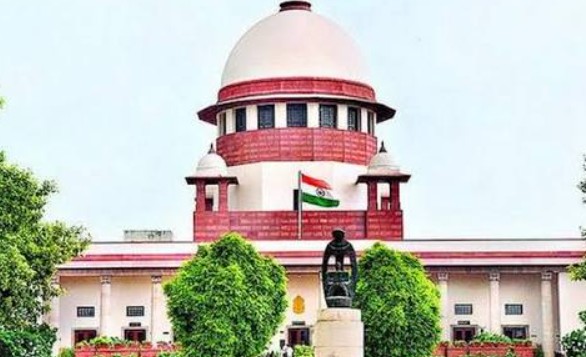
In a significant constitutional development, the Supreme Court has responded to 11 of the 14 questions posed by President Droupadi Murmu regarding the powers and limitations of Governors and the President in the legislative process. A Constitution Bench headed by Chief Justice B. R. Gavai delivered the opinion following an extensive hearing earlier this year. Three of the queries raised in the Presidential Reference were left unanswered.
Background
Federal Tensions Prompt Presidential Intervention
The Presidential Reference was initiated amid growing conflicts between several State Governments and Governors over prolonged delays in granting assent to Bills passed by State Legislatures. Allegations of legislative paralysis and deliberate stalling prompted the President to seek clarity on the constitutional boundaries of Articles 200 and 201, which govern the assent process.
The Questions Before the Court
Fourteen Issues on Executive Discretion and Judicial Oversight
The questions sought clarity on the scope of a Governor’s discretion, the necessity of following Cabinet advice, whether delays could be judicially examined, the extent of immunity under Article 361, whether the Supreme Court could impose a time-limit for clearing Bills, and whether the Court could declare “deemed assent” using Article 142.
Additional queries related to whether a Bill could become law without a Governor’s assent, whether larger benches were mandatory for serious constitutional matters, and whether Article 131 was the sole avenue for resolving Centre–State disputes.
Key Findings
Governor’s Discretion Limited but Present
The Court held that a Governor is not bound in every instance to follow the advice of the State Cabinet when a Bill is presented under Article 200.
Three Constitutional Options for Governors
The bench affirmed that the Governor has three options: granting assent, withholding assent and reserving the Bill for the President, or returning it to the Legislature for reconsideration. Returning a Bill with comments is not permissible beyond the framework specified in Article 200.
Judicial Review Restricted to Examining Delay
While the Governor’s and President’s decisions cannot be reviewed on merits, the Supreme Court may intervene if there is undue delay. The Court may direct the authority to take a decision but cannot dictate what that decision should be.
Article 361 Does Not Shield Inaction
Although Article 361 protects Governors from personal legal proceedings, the Court clarified that administrative inaction by their office is not immune from judicial scrutiny.
No Time-Limit Can Be Imposed
The bench made it clear that the Supreme Court cannot impose deadlines on Governors or the President for granting or withholding assent. The Constitution does not recognise the concept of “deemed assent,” and therefore such a device cannot be introduced through judicial powers under Article 142.
President Not Bound to Seek Supreme Court Opinion
The Court stated that the President is not obliged to consult the Supreme Court under Article 143 when a Bill is reserved for consideration. The decision to seek an advisory opinion remains completely discretionary.
Assent Essential for a Bill to Become Law
Reiterating established procedure, the Court held that a Bill passed by a State Legislature cannot become law without the Governor’s assent.
Unanswered Queries
Three Constitutional Issues Reserved for Future Consideration
The Court did not respond to three of the 14 questions. While the judgment does not specify them, they are believed to relate to the mandatory size of benches for constitutional interpretation, the extent of the Supreme Court’s powers under Article 142, and whether Article 131 is the exclusive mechanism for resolving Centre–State disputes.
Implications
Clarity on Key Processes, But Federal Ambiguities Remain
The Supreme Court’s opinion provides much-needed guidance on the roles and limitations of Governors and the President, particularly in light of increasing Centre–State friction. It reinforces that constitutional authorities cannot indefinitely stall the legislative process, even though their decisions enjoy protection from direct review.
However, the unresolved questions leave scope for further litigation and debate over the structure of India’s federal governance.