
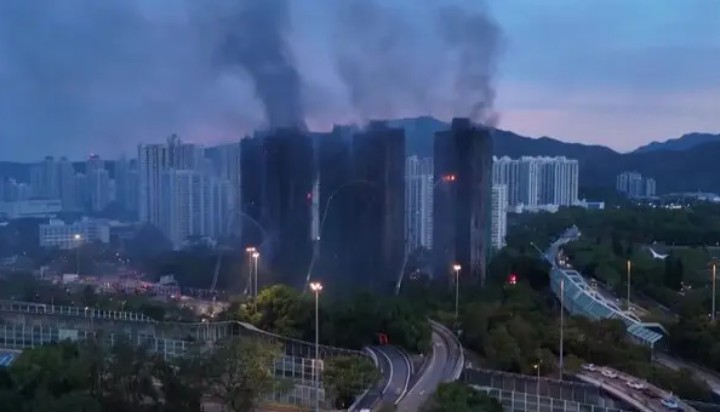
In one of Hong Kong’s most tragic urban disasters in recent years, a fierce blaze swept through a cluster of high-rise residential buildings in Tai Po on Tuesday night, killing at least 44 people and injuring many others. The fire spread rapidly across seven adjoining towers, leaving residents trapped and entire floors engulfed in flames.
Fire’s Origin and Rapid Spread
According to officials, the blaze is believed to have started on the exterior scaffolding of one of the buildings undergoing renovation. Bamboo scaffolding and protective netting — widely used in Hong Kong’s construction — may have accelerated the fire’s spread from one tower to another. Once ignited, the flames quickly climbed the facades, reaching upper floors before many residents could respond.
Residents Caught Off-Guard
Many of the occupants, including elderly individuals and families, were asleep when the fire broke out. Some residents reportedly struggled to escape due to sealed or obstructed windows linked to ongoing maintenance work. Firefighters fought through high heat and dangerous structural conditions, with one crew member among the fatalities.
Investigation Underway
Authorities have launched a comprehensive investigation into potential safety lapses. Police have questioned multiple construction-related personnel and are examining whether renovation practices, materials used, or negligence played a role in the scale of the disaster. Early probes suggest that the combination of dense residential occupation and external scaffolding may have created a catastrophic vulnerability.
Wider Implications
This tragedy has intensified debate over building-safety regulations in Hong Kong’s vertical urban environment. Experts are calling for a review of renovation procedures, emergency evacuation protocols, and fire-control infrastructure in densely packed residential districts.
As the city mourns the lives lost, the incident stands as a stark reminder of the challenges faced by high-rise communities — and the critical need for stringent safety measures to prevent similar disasters in the future.