
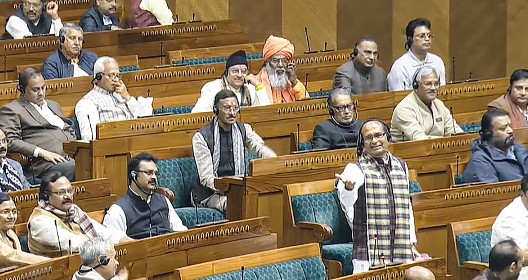
Parliament on Thursday passed the Viksit Bharat–Guarantee for Rozgar and Ajeevika Mission (Gramin) Bill, 2025, commonly referred to as the G RAM G Bill, paving the way for the replacement of the Mahatma Gandhi National Rural Employment Guarantee Act. The bill was cleared by both the Lok Sabha and the Rajya Sabha amid strong protests from opposition parties, several of whom staged a walkout during the proceedings.
The government described the new legislation as a reform aimed at strengthening rural employment by linking it more closely with long-term development goals. According to the government, the bill increases the annual work entitlement from 100 days to 125 days and focuses on sectors such as water conservation, rural infrastructure, livelihood creation and disaster resilience. It said the new framework would make rural employment more efficient, predictable and aligned with the broader vision of building a developed India.
Opposition parties, however, sharply criticised the bill, arguing that it dilutes the spirit of MGNREGA, which provided a legally enforceable guarantee of employment to rural households. They alleged that the new law weakens workers’ rights, reduces accountability and shifts greater responsibility to state governments without adequate financial assurance. Several opposition members also objected to the removal of Mahatma Gandhi’s name from the scheme, calling it an attempt to erase the legacy of a landmark social welfare programme.
As protests intensified, opposition MPs demanded that the bill be sent to a parliamentary committee for detailed examination. When this demand was rejected, they walked out of the House in protest. Later, opposition leaders staged a sit-in demonstration, accusing the government of pushing through major legislation without adequate consultation or debate.
The MGNREGA, enacted in 2005, has long been considered a crucial safety net for rural India, guaranteeing wage employment and supporting millions of households during periods of distress. With the passage of the G RAM G Bill, the existing law will now be replaced, subject to formal assent and subsequent notifications.
The government maintains that the new law represents an improvement rather than a rollback, while the opposition has vowed to continue resisting its implementation, warning that it could adversely affect rural livelihoods across the country.