
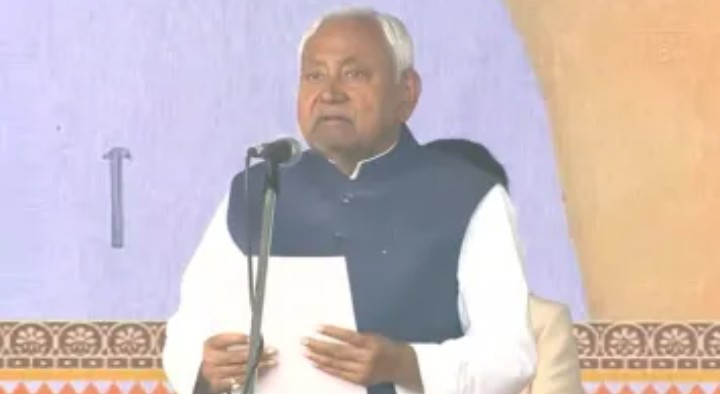
With Nitish Kumar taking oath as Chief Minister for the tenth time, a total of 27 ministers were sworn in on Monday in the new Bihar government. The National Democratic Alliance (NDA) has formed a cabinet in which the Bharatiya Janata Party (BJP) holds the majority share of ministerial positions. The alliance has also kept room for nine additional ministers to be inducted later.
Party Composition Finalised
Among the newly sworn-in ministers, 14 belong to the BJP. Two additional BJP leaders — Samrat Choudhary and Vijay Kumar Sinha — have taken oath as Deputy Chief Ministers.
The Janata Dal (United), the Chief Minister’s party, has secured eight berths for its winning candidates.
The remaining places have been distributed among smaller NDA allies:
• Lok Janshakti Party (Ram Vilas) — 3 ministers
• Hindustani Awam Morcha — 1 minister
• Rashtriya Lok Morcha — 1 minister
Cabinet Size and Remaining Vacancies
With 27 members now part of the ministry, the Bihar cabinet still has space for nine more, as the total permitted strength is 36. NDA leaders have indicated that the remaining positions will be filled in a calibrated manner to ensure political balance.
BJP Holds Numerical Upper Hand
Although Nitish Kumar has retained the Chief Minister’s post, the numerical strength within the cabinet clearly favours the BJP. In the previous NDA government, JD(U) held 13 ministries while the BJP had 19. Both parties now have fewer posts as the coalition has accommodated smaller allies.
Initially, the BJP had proposed a “6:1” formula for cabinet distribution — meaning six BJP ministers for every one minister from the smaller allies. However, the actual composition does not strictly follow that ratio, though the BJP remains the largest stakeholder.
Portfolio Allocation Still Pending
While the ministerial list is now known, specific portfolios have not yet been allocated. Political observers note that the BJP is expected to hold prominent departments, reflecting its increased numerical presence.
How Nitish Kumar balances the distribution of influential ministries between the JD(U), BJP and smaller partners will be a key factor in maintaining stability within the alliance.