
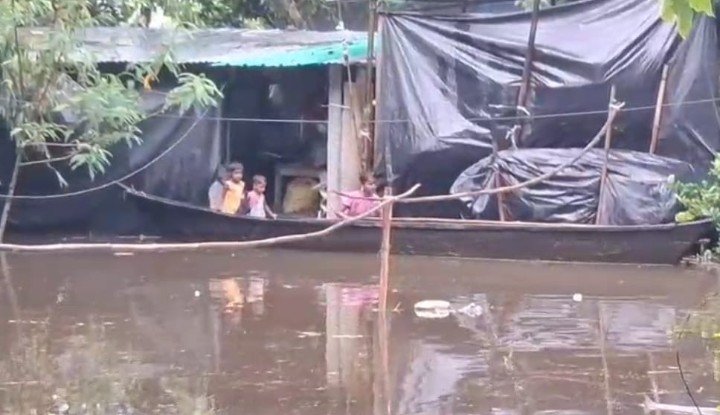
While tourism activity across North Bengal has largely returned to normal, with major routes and hill destinations now functional, the interior river-side belts tell a very different story. Along the Jaldhaka River, especially in parts of Dhupguri and Maynaguri, hundreds of families are still living under torn plastic sheets after their homes were destroyed by the recent floods. Behind the images of tourists enjoying clear skies and green hills, an unseen humanitarian struggle continues.
Families Cut Off from Help
Around 200 families are believed to be affected on both sides of the river. While the western bank near Maynaguri is slowly regaining access to basic services, the eastern bank, including the Bogoribari area under Dhupguri block, remains severely cut off. Residents there claim that no consistent government or voluntary help has reached them due to washed-out roads and broken bridges.
Crumbling Roads and Broken Links
Several roads leading to the riverside villages have been completely destroyed by the swollen river. Reconstruction work has not yet begun in many parts. Train movement, too, remains partially disrupted — only one of the two railway lines is operational, while repairs on the second are still underway. For many villages, the damaged railway embankment had served as a crucial route for relief movement.
Night Without Light, Women Without Safety
In most makeshift shelters set up on embankments, there is no electricity or lighting at night, leaving families in darkness and fear. Women are facing the worst of the crisis, with no proper toilet or sanitation facilities available near the temporary camps. Many say they have to walk long distances in unsafe conditions just to relieve themselves.
Administrative Action and Public Health Concerns
Health workers have cleared decomposed animal carcasses and debris from the flood zone to prevent disease outbreaks. However, locals warn that the absence of clean drinking water and proper waste disposal could soon trigger a secondary health emergency if not addressed quickly.
Waiting for Relief, Hoping for Normalcy
While district officials have promised continued relief operations, people in the eastern belt allege that aid distribution has been slow and uneven. “We have lost everything — our homes, fields, and belongings. We just need proper food, light, and some assurance that help is coming,” said a local resident from Bogoribari.
For now, the riverbanks of Jaldhaka remain lined with plastic-sheet shelters — silent witnesses to lives waiting to be rebuilt.