
Union Commerce and Industry Minister Piyush Goyal and Agriculture Minister Shivraj Singh Chouhan on Sunday asserted that the government has safeguarded the interests of Indian farmers in the interim trade agreement framework with the United States. Opposition parties, however, said they would raise the issue in Parliament on Monday and demand detailed clarifications.
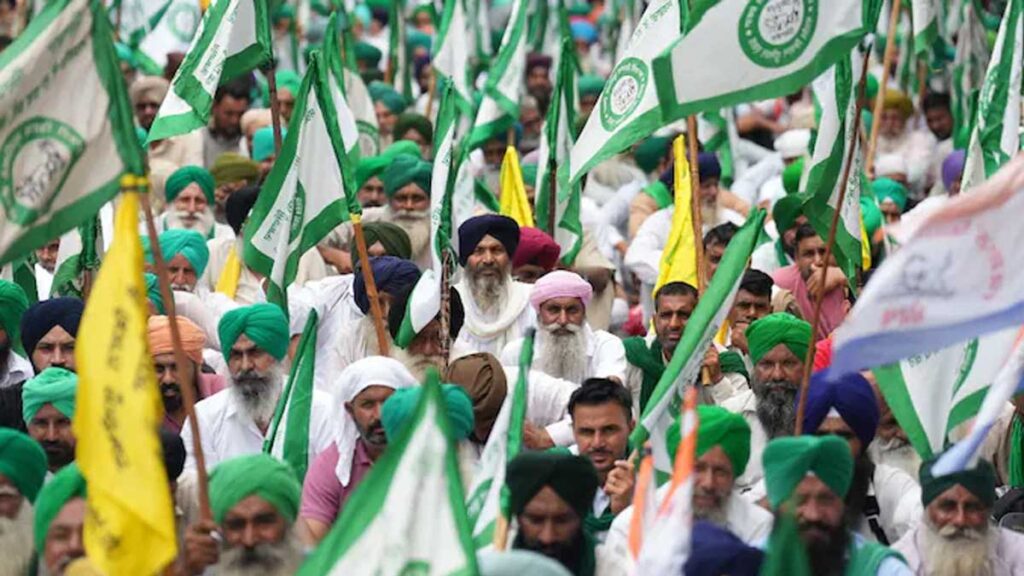
Several trade unions and farmer organisations have announced a nationwide strike on February 12, alleging that the government has “surrendered” to US pressure by opening India’s agriculture sector to American multinational companies.
Affiliates of the Rashtriya Swayamsevak Sangh (RSS), including the Swadeshi Jagran Manch (SJM) and the Bharatiya Kisan Sangh (BKS), have taken a more nuanced view of the agreement. SJM national co-convenor Ashwani Mahajan said the government had worked out the “best possible scenario” under the circumstances. He added that criticism of the deal should consider the relative tariffs imposed by the US on competing countries, noting that the 18 per cent tariff on Indian goods is lower in most cases.
Mahajan recalled that India had exited the Regional Comprehensive Economic Partnership (RCEP) to protect farmers and the dairy sector, and said the same principle has guided trade talks with the European Union, Australia, the UK and now the US.
“We should not go by statements from the US Trade Representative or others. We should trust our government and ministers, who are accountable to Parliament and the people. The government has maintained that strict quantitative restrictions have been imposed on imports of soybean oil and animal feed,” Mahajan said, adding that India could raise tariffs if the US violates these limits.
He also described US references to “monitoring” India’s purchases of Russian oil as being in poor taste, while noting that the savings from such imports are no longer as significant as in the past.
The Bharatiya Kisan Sangh welcomed the interim trade framework but raised concerns, particularly over genetically modified (GM) products. BKS general secretary Mohini Mohan Mishra said GM products should not be allowed in India under any circumstances and called for greater clarity from the government.
In contrast, farmer groups such as the Samyukt Kisan Morcha (SKM) and the All India Kisan Sabha have announced protests against the agreement. The SKM termed the framework a “total surrender” of Indian agriculture to US multinational corporations and demanded the resignation of Commerce Minister Goyal. It said protests would be held in villages across the country, including the burning of effigies of US President Donald Trump and Prime Minister Narendra Modi, and extended support to the February 12 general strike.
Bharatiya Kisan Union leader Rakesh Tikait said villagers were questioning how the deal would affect them and urged farmers to join the protests.
The Congress and Left parties have also criticised the government over the trade framework and said they would seek answers in Parliament. CPI(M) general secretary Dipankar Bhattacharya described the deal as a “meek surrender” to US pressure and an attack on India’s sovereignty, autonomy and farmers’ livelihoods.
The CPI(M) further alleged that the government had made sweeping concessions, including zero tariffs on US exports of fruits, cotton, tree nuts and soybean oil. It warned that apple farmers in Himachal Pradesh, Jammu and Kashmir and other states were already under pressure due to earlier trade agreements, and said cotton farmers could face fresh challenges from heavily subsidised US farm products, worsening agrarian distress.