
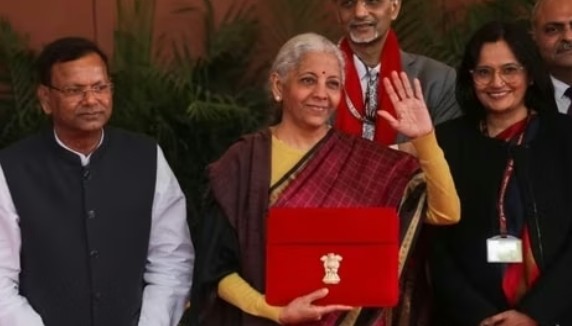
Finance Minister Nirmala Sitharaman on Sunday presented her ninth consecutive Union Budget, creating a record in India’s parliamentary history. Ahead of the presentation, Sitharaman followed established tradition by visiting the finance ministry at Kartavya Bhavan and calling on President Droupadi Murmu.
As the Union Budget 2026 is unveiled, expectations are high, especially around income tax announcements and possible changes to income tax slabs under the new tax regime. While major overhauls may be unlikely, taxpayers—particularly the middle class—are hoping for some relief.
During her Budget speech, the Finance Minister outlined several reform measures aimed at strengthening the economy. Key announcements on direct taxes are expected later in the speech, which will clarify the government’s stance on income tax rates and slabs for FY27.
Income tax slabs: Old vs new tax regime
Under the old tax regime, income tax rates are structured as follows:
Income up to ₹2.5 lakh is exempt from tax. Income between ₹2.5 lakh and ₹5 lakh is taxed at 5 per cent, income between ₹5 lakh and ₹10 lakh at 20 per cent, and income above ₹10 lakh at 30 per cent.
Under the new tax regime, the slabs are more granular. Income up to ₹4 lakh is exempt from tax. Income between ₹4 lakh and ₹8 lakh is taxed at 5 per cent, ₹8 lakh to ₹12 lakh at 10 per cent, ₹12 lakh to ₹16 lakh at 15 per cent, ₹16 lakh to ₹20 lakh at 20 per cent, ₹20 lakh to ₹24 lakh at 25 per cent, and income above ₹24 lakh at 30 per cent.
With Sitharaman now delivering her Budget speech in Parliament, clarity on income tax changes will soon emerge, revealing what the government has planned for taxpayers and the middle class in the coming financial year.