
Shrayan Sen
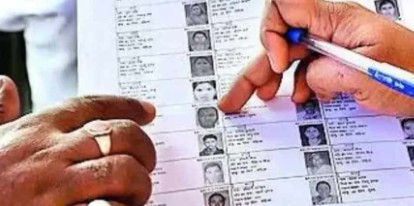
The ongoing Special Intensive Revision of electoral rolls has thrown up a striking contrast between Tamil Nadu and West Bengal, one that sharply undercuts political claims made in recent years about the nature of voter list irregularities in eastern India.
After the first phase of revision, Tamil Nadu has seen nearly 97 lakh names deleted from its electoral rolls — a figure far higher than the roughly 58 lakh deletions recorded in West Bengal’s draft list. This gap is significant not only in numerical terms, but also in what it reveals about the political narrative surrounding voter roll corrections.
For years, the BJP and its supporters have repeatedly alleged that West Bengal’s voter list is heavily contaminated by “illegal Bangladeshi” voters, suggesting large-scale cross-border infiltration into the electoral system. The claim has been a central plank of political messaging, especially during elections. However, the official deletion data released under the supervision of the Election Commission of India does not reflect this allegation.
In West Bengal, the reasons cited for deletions remain strictly administrative: voters marked as deceased, those who have migrated, those found missing or untraceable, and duplicate entries. Notably absent is any category related to foreign nationality, illegal immigration, or Bangladeshi citizenship. The same pattern holds in Tamil Nadu, where deletions are attributed to similar causes — death, relocation, and duplication — but on a much larger scale.
The contrast is revealing. If the presence of illegal Bangladeshi voters were as widespread in West Bengal as claimed, one would expect the deletion list to explicitly reflect citizenship-related violations. Such cases would require verification beyond routine electoral checks, involving home ministry records and nationality confirmation. The absence of any such classification suggests that the revision exercise is focused on cleaning up outdated or inaccurate entries rather than identifying foreign nationals.
Tamil Nadu’s much larger deletion figure further weakens the argument that voter list inflation is uniquely or disproportionately a West Bengal phenomenon. Despite no sustained political campaign alleging mass infiltration there, the southern state has witnessed a far bigger roll correction. This indicates that voter list inaccuracies are a nationwide administrative issue, not necessarily the product of cross-border migration or demographic conspiracy.
The situation highlights the growing gap between political rhetoric and institutional data. While the BJP continues to frame West Bengal’s voter list issues in terms of illegal immigration, the Election Commission’s own figures point to a more mundane reality of demographic movement, mortality, and record duplication — the same challenges faced across states.
As claims and objections continue before the final rolls are published, the numbers from Tamil Nadu serve as a reminder that large-scale deletions do not automatically validate political accusations. Instead, they underline the importance of evidence-based debate, especially when electoral integrity and citizenship are invoked in the public discourse.
In the end, the data tells a simpler story: voter list revision is a routine but massive administrative exercise. Attempts to project it as proof of a specific political allegation, particularly in West Bengal, find little support in the official records themselves.