
Shrayan Sen
Lionel Messi’s much-hyped India tour unfolded in sharply contrasting fashion across two cities, exposing glaring gaps in event management. While the Kolkata leg at Salt Lake Stadium spiralled into chaos, prompting a public apology and police action, the Hyderabad event stood out for its smooth execution, disciplined crowds and professional planning, drawing widespread praise from fans and observers alike.
Mismanagement at Salt Lake Stadium
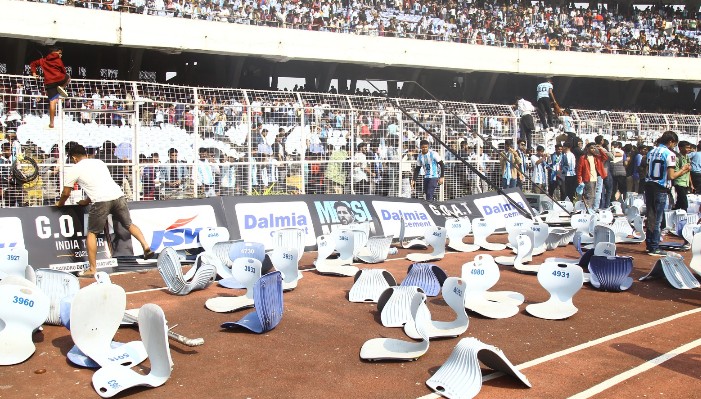
The Kolkata leg of Lionel Messi’s India visit descended into chaos due to alleged mismanagement at the Salt Lake Stadium, turning a highly anticipated event into a major embarrassment for organisers and authorities alike. Thousands of fans who gathered at the Vivekananda Yuba Bharati Krirangan complained of poor crowd control, confusion over entry and seating, lack of clear communication, and restricted visibility of the football icon. As frustration mounted inside the stadium, security concerns escalated, forcing organisers to curtail the programme much earlier than scheduled.
Scenes of unrest inside the venue, including angry protests by spectators, quickly went viral, triggering widespread criticism and raising serious questions about event planning, ticketing arrangements and safety preparedness.
Chief Minister’s Public Apology
Following the incident, West Bengal Chief Minister Mamata Banerjee issued a public apology, expressing regret over the inconvenience caused to football fans and visitors. Acknowledging that the situation should have been handled better, she assured that the state government would probe the lapses and take corrective measures to prevent a recurrence at future high-profile events. Her apology, however, did little to quell public anger, with many demanding accountability for the mismanagement.
Arrest of Shatadru Dutta
As part of the investigation into the Salt Lake Stadium fiasco, Kolkata Police arrested Shatadru Dutta, citing his alleged role in the mismanagement of the event. According to police sources, the arrest was made following complaints related to crowd control failures, safety norm violations and organisational lapses. Dutta was produced before a court as authorities continued to examine the responsibility of the organisers. Officials have indicated that further legal action cannot be ruled out as the probe progresses.
Hyderabad Event Offers a Stark Contrast
In contrast to Kolkata, Messi’s appearance in Hyderabad was widely praised for its smooth execution and professional management. Clear entry protocols, disciplined crowd movement, effective security deployment and proper use of large display screens ensured that fans had a comfortable and well-organised experience. The programme followed a defined schedule, allowing adequate fan interaction without compromising safety.
There were no reports of ticketing confusion or crowd unrest in Hyderabad, and coordination between organisers, local administration and security agencies was cited as a key reason for the event’s success.
Lessons from Two Cities
The sharply contrasting experiences in Kolkata and Hyderabad have intensified the debate around the management of large-scale international events in India. While the Kolkata episode has cast a shadow over the city’s image as a football-loving hub, the Hyderabad event has emerged as an example of how meticulous planning and coordination can deliver a safe and memorable experience. As investigations continue in the Kolkata case, the focus remains on ensuring accountability and restoring public confidence.