
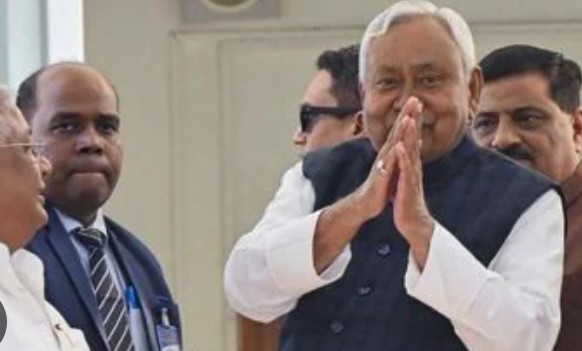
After a sweeping victory in the Bihar assembly elections, Nitish Kumar is poised to be sworn in as the Chief Minister of Bihar for an unprecedented tenth time. The ceremony is scheduled for today at the iconic Gandhi Maidan in Patna, where elaborate preparations are already underway.
Ceremony and Crowd Expectations
The stage at Gandhi Maidan has been erected, with large pandals constructed to accommodate not only dignitaries but also what officials expect to be a crowd of over three lakh people. Central figures in attendance will include Narendra Modi (Prime Minister), Amit Shah (Home Minister) and other senior leaders of the ruling alliance. Security arrangements have been beefed up accordingly.
Political Backdrop: The Election Mandate
The swearing-in follows the triumphant return of the National Democratic Alliance (NDA) in Bihar, where the coalition secured 202 out of 243 seats. Within that tally, the BJP won 89 and the JD(U) 85 seats, demonstrating a strong performance by both major constituents. Smaller allied parties such as the LJP(RV), HAM-S and RLM also carved out representation.
Cabinet Line-up & Power Sharing
Discussions continue behind the scenes regarding the composition of the new cabinet. Reports suggest that the BJP will be allotted 16 ministerial berths while JD(U) will fill 14 slots alongside Nitish Kumar. Among new faces expected are Umesh Singh Kushwaha (JD(U)) and potential BJP inductees like former IPS officer Anand Mishra. Smaller allies are also slated to receive positions: the LJP(RV) possibly securing three ministerial berths, HAM-S and RLM one each.
Why This Matters
A tenth term is unprecedented in Bihar’s political history and reflects Nitish Kumar’s enduring influence in the state. At the same time, the large mandate gives the alliance a robust platform for governance. The new cabinet’s makeup will be watched closely: it must balance continuity with fresh leadership in order to meet the electorate’s raised expectations.
Looking Forward
With the ceremony set for today, the coming days will likely focus on launching key policy initiatives, realising electoral promises and setting the tone for governance. For Bihar’s citizens, the government’s effectiveness will now be under renewed scrutiny: can this administration translate overwhelming electoral support into tangible improvements in development, services and social welfare?