
Shrayan Sen
Jamaica has long captured the world’s imagination — through the warmth of Harry Belafonte’s Jamaican Farewell, the rhythm of reggae, and the thrill of cricket icons like Chris Gayle. But now, that vibrant island stands scarred by a catastrophe unlike anything in living memory.
Hurricane Melissa — an immensely powerful Category-5 storm — roared into southwestern Jamaica with wind speeds nearing 298 km/h, the strongest landfall the island has faced in 178 years. Its eyewall alone spanned an area nearly double the size of Jamaica, engulfing the entire nation in a ring of destruction.
Prime Minister Andrew Holness expressed the shock and resolve of a nation:
“Our country has been ravaged by Hurricane Melissa but we will rebuild and we will do so even better than before.”
A country cut off from itself
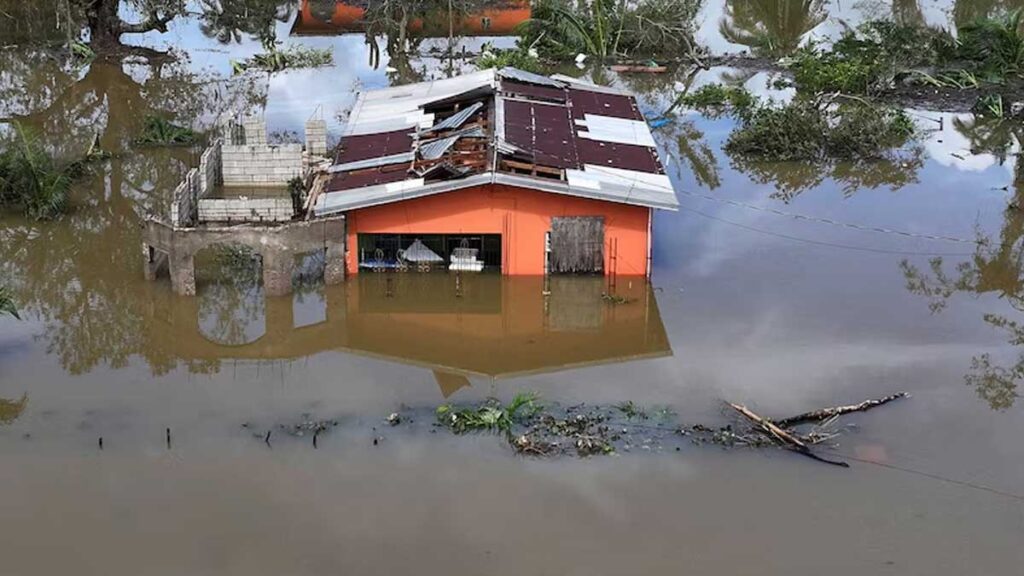
Power grids collapsed. Roads disappeared under floodwaters. Hospitals, schools and farmlands suffered widespread damage. More than half a million households were plunged into darkness within hours of landfall.
Large regions remain unreachable and the current death toll cannot capture the real extent of loss. Survivors wait for help in isolated, devastated communities.
Holness acknowledged the suffering directly:
“I know your pain and I feel your loss… your homes may have been damaged or destroyed.”
Climate pressure and economic strain
Caribbean island nations like Jamaica contribute only a tiny share of global emissions. Yet they stand exposed to the most destructive edges of the climate crisis.
Melissa intensified explosively over unusually warm Caribbean waters — a pattern that threatens to make extreme hurricanes more frequent and more violent. The financial cost is expected to run into billions of dollars — a heavy burden for a developing island economy.
The Prime Minister admitted the scale of the challenge:
“It is going to be a massive task to rebuild Black River … But while it is destroyed, we can vision a future of it rising stronger and better.”
A warning written in wind
Cyclone intensity is not simply about wind speed — it reflects the energy a storm carries, the force that tears apart buildings, uproots trees and reshapes coastlines. Scientists point out that every small increase in ocean temperature gives hurricanes more fuel. The waters feeding Melissa were well above the long-term average — a red flag climate experts have been raising for years.
To place the danger in context:
- Cyclone Amphan struck Sagar Island with winds of around 170 km/h,
weakening to roughly 130 km/h over Kolkata - Hurricane Melissa hit Jamaica close to 300 km/h at landfall,
maintaining destructive strength over land far longer than expected
As wind speed rises, destructive power doesn’t double — it rises exponentially. That is why concrete buildings in coastal towns suffered structural failure, why steel roofs lifted like paper, and why even disaster-resistant shelters struggled to withstand the gusts.
Meteorologists say storms like Melissa used to be considered “1-in-100-year” events. Now they are becoming more likely in a warming world where:
• Sea levels are higher — worsening storm surge
• Rainfall rates are faster — worsening floods
• Tropical storms strengthen faster — reducing preparation time
Melissa was not just a natural disaster — it was a message.
Holness’s words captured the gravity of this moment:
“I have been on my knees in prayer… It would appear the entire world is praying for Jamaica.”
Rising from the ruins
Behind every statistic are human stories — families uprooted, livelihoods erased, towns that must be rebuilt brick by brick. Schools serving as shelters. Farmers watching years of effort washed away within hours.
Melissa will be remembered as the storm that changed Jamaica. But the future of the country will be written by its resilience.
Rebuilding will be long and challenging, but the determination of the Jamaican people is already clear — and they will not face this struggle alone. The world must stand beside them.
There’s a lot to learn from the Jamaicans, their leader too. They are determined not to bid farewell to life even after such a catastrophe. Salute.
Very well written report.