
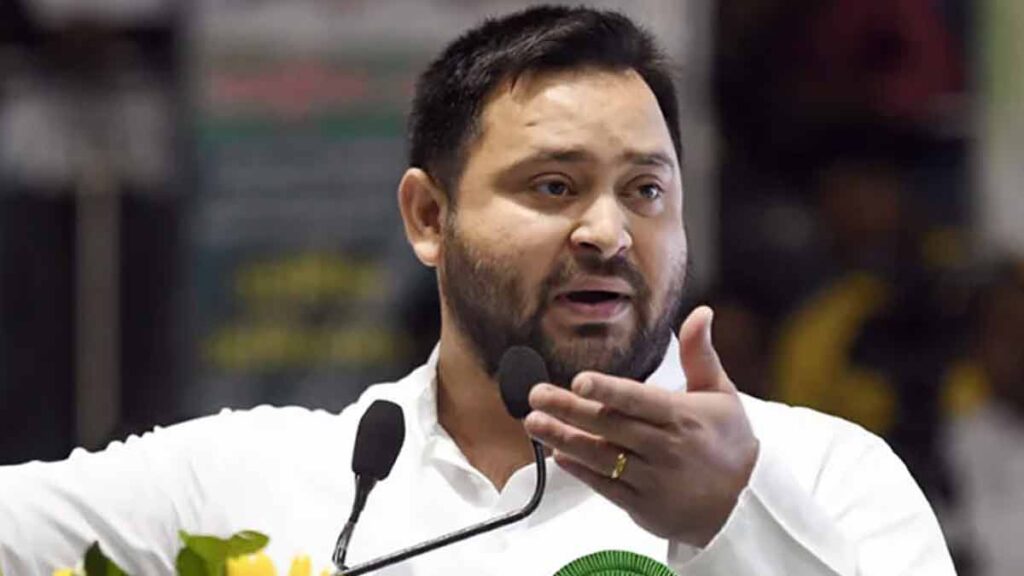
In a significant political statement ahead of the Bihar Assembly elections, opposition leader Tejashwi Yadav announced that the Mahagathbandhan (Grand Alliance) government, if elected, will have more than one Deputy Chief Minister.
Speaking to reporters, the Rashtriya Janata Dal (RJD) leader said, “You will see more Deputy Chief Ministers. In a few days, you will know in this regard.” He, however, did not specify the number or names of those who might be chosen for the posts.
Power-Sharing Strategy
The announcement is being viewed as a move aimed at strengthening the opposition alliance by ensuring greater representation for its partners. The Mahagathbandhan includes the RJD, Congress, CPI(M), CPI(ML), and Vikassheel Insaan Party (VIP). Reports suggest that a Deputy Chief Minister–like position has already been earmarked for Mukesh Sahani, the VIP party chief.
Tejashwi’s statement is being interpreted as an attempt to project an inclusive power-sharing model to balance the demands of various communities, regions, and alliance partners across Bihar.
Political Context
In Bihar’s caste- and community-driven political landscape, representation holds immense importance. By promising multiple deputy chief ministers, the opposition seems to be reaching out to a wider voter base, ensuring that no major group or ally feels left out.
Governance Implications
If implemented, the plan could result in broader political unity within the alliance, but also raise concerns about administrative complexity and overlapping responsibilities. Similar arrangements have been seen in states like Uttar Pradesh and Maharashtra, where more than one Deputy Chief Minister held office to accommodate coalition partners.
The Mahagathbandhan is expected to release its detailed seat-sharing and leadership structure soon. Tejashwi Yadav remains the front-runner for the Chief Minister’s post, while the inclusion of multiple deputy chief ministers could mark a new experiment in Bihar’s coalition politics.