
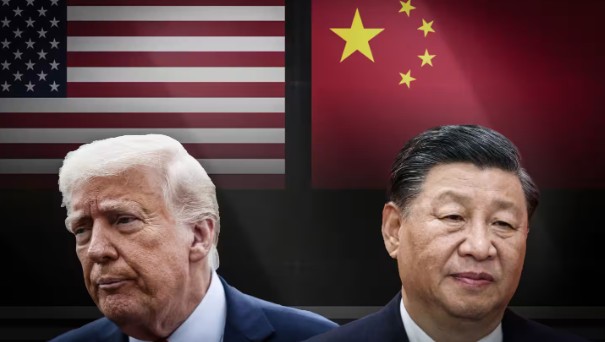
U.S. President Donald Trump announced on Friday that he will impose an additional 100 percent tariff on Chinese imports and threatened to cancel a planned summit with Chinese President Xi Jinping, reigniting tensions in the U.S.–China trade war.
The new tariffs, along with U.S. export restrictions on “any and all critical software,” are set to take effect from November 1. Trump said these measures are retaliation for what he described as Beijing’s “extraordinarily aggressive” actions.
“We cannot allow China to hold the world captive. Their stance is very hostile,” Trump said on his Truth Social platform. He also questioned the timing of China’s moves and expressed disbelief at their sudden escalation.
The announcement rattled global markets. The Nasdaq fell by 3.6 percent, and the S&P 500 dropped by 2.7 percent in response.
Under current U.S. policy, Chinese goods already face tariffs of about 30 percent, implemented during Trump’s earlier term over allegations of unfair trade practices and China’s involvement with fentanyl-related supply chains. China, in turn, has countered with tariffs of around 10 percent.
Rare earth minerals, critical to sectors like electronics, defense, and renewable energy, lie at the heart of the dispute. China dominates the global production and processing of these materials.
In his remarks, Trump also addressed a planned meeting with Xi at the upcoming APEC summit in South Korea, saying the summit may be called off: “I was supposed to meet President Xi in two weeks… but now there seems to be no reason to do so,” he said.
No official reaction had been issued by Beijing at the time of the report.