
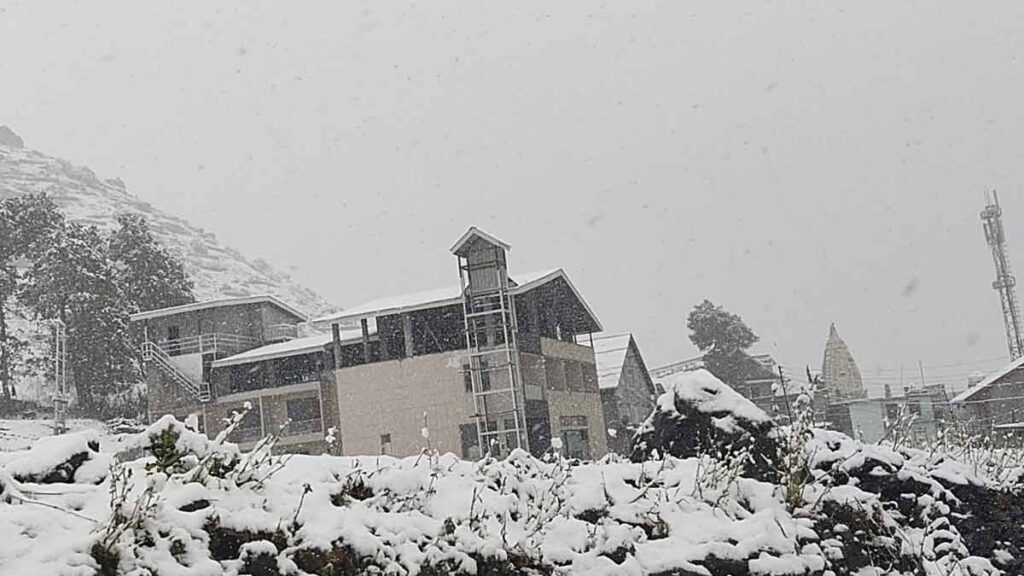
Snowfall covers Sissu, Himachal Pradesh. Photo Courtesy: Joydeep Guha Chowdhury
The Himalayan region welcomed an early taste of winter on monday, 6th October, as the higher reaches of Kashmir, Himachal Pradesh, and Uttarakhand witnessed the season’s first snowfall. The fresh spell brought joy to tourists and locals alike, while also triggering a sharp dip in temperatures across North India.
Snow-Covered Peaks in Kashmir
In Jammu and Kashmir, higher-altitude areas such as Gulmarg’s Affarwat, Sinthan Top, Zojila Pass, Razdan Pass, and Pit Ki Gali received a blanket of fresh snow.
While the Kashmir Valley itself witnessed rain, the cold winds sweeping down from the mountains led to a significant fall in temperatures — Srinagar’s maximum temperature dropped from around 22°C to 11°C within 24 hours.
According to the Meteorological Department, this was officially the first snowfall of the season, marking an unusually early onset of winter in the region. The sight of snow in October has also revived the hopes of the tourism sector, which expects a surge in visitors to destinations like Gulmarg and Sonamarg in the coming weeks.
Himachal Pradesh Turns White
In Himachal Pradesh, the high mountain passes including Rohtang, Baralacha La, and the Dhauladhar ranges received moderate snowfall.
Regions like Lahaul-Spiti and Pangi Valley (Chamba) reported white landscapes early Monday morning, while the lower hills experienced rainfall.
The India Meteorological Department (IMD) had earlier issued an orange alert for heavy rainfall and isolated snowfall, warning of potential disruptions in high-altitude routes. By afternoon, snow accumulation caused road blockages along parts of the Manali–Leh highway, prompting the administration to advise travelers to avoid unnecessary movement.
Uttarakhand’s Shrines Under Snow
In Uttarakhand, the revered shrines of Kedarnath and Badrinath were draped in a layer of snow, creating a mesmerizing wintry scene. Light to moderate snowfall was reported in the surrounding peaks of Rudraprayag and Chamoli districts.
The early snow added to the spiritual ambiance of the Himalayan temples, drawing praise from pilgrims and travelers visiting the Char Dham circuit.
The IMD had already forecast snow in the high ridges and heavy rain in other parts of the state. Officials said this snowfall marks the beginning of the transition from monsoon to winter weather across the Himalayan belt.
Sharp Drop in Temperature Across the North
The fresh western disturbance not only triggered snowfall in the mountains but also brought widespread rain across the northern plains.
Cities like Delhi, Chandigarh, and Dehradun recorded a noticeable fall in temperatures, signaling the start of cooler days ahead.
Meteorologists attribute the event to the interaction between a western disturbance and retreating monsoon moisture — a combination that occasionally brings early October snow to the Himalayas.
Tourism Boost and Precautionary Warnings
Tourism stakeholders in Kashmir and Himachal hailed the snowfall as a positive start to the winter tourism season, with hotel bookings already showing an uptick. The snow-covered peaks of Gulmarg, Rohtang, and Kedarnath are expected to attract travelers in the coming weeks.
However, authorities have urged caution for travelers, particularly those heading to high-altitude passes and shrines, citing slippery roads, low visibility, and potential landslides due to rain and melting snow.
A Remarkably Early Winter Signal
While October snowfall is not unprecedented, such early and widespread snow across three Himalayan states is relatively uncommon.
Weather experts note that although this snow may not persist for long due to intermittent sunshine, it signals the early arrival of colder air masses and a shift toward winter conditions across northern India.