
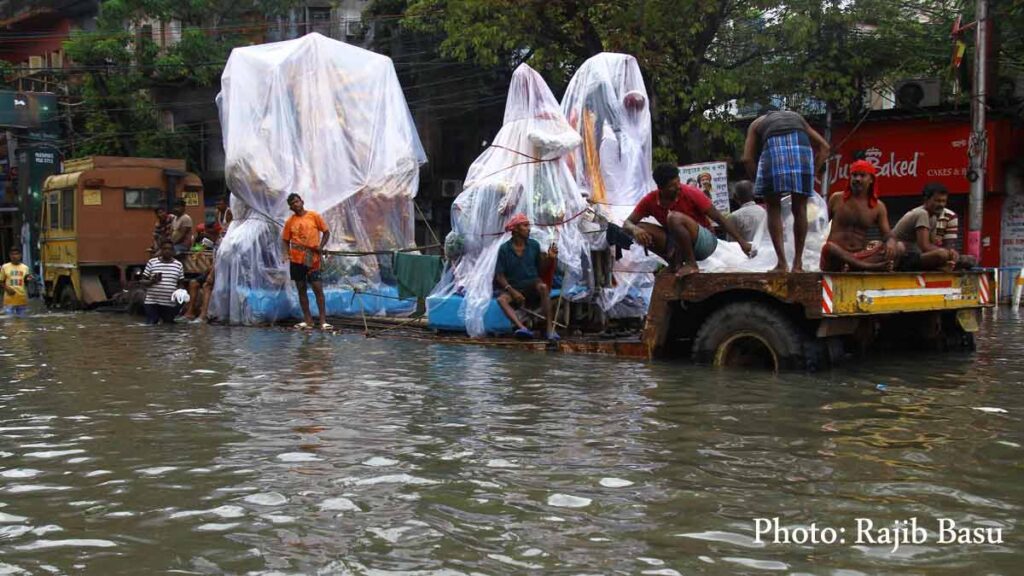
Kolkata is struggling to return to normalcy even after 24 hours of literally no rain. The heavy downpour on monday night, which officials described as the heaviest in nearly four decades, triggered severe waterlogging, widespread power cuts, and large-scale disruption of daily life. At least ten people lost their lives in rain-related incidents, eight of them due to electrocution caused by exposed wires in flooded streets, putting the city’s power distribution company, CESC, under sharp criticism.
The scale of waterlogging has been immense. Even without fresh rain since tuesday morning, several parts of the city, including Gariahat, Joka, Sarsuna, Thanthania, and Amherst Street, were still under water in wednesday morning. In southern suburbs of the city, Jadavpur, Garia, Patuli are still struggling to cope with the waterlogged sitution. Authorities cut electricity in multiple neighborhoods as a precautionary measure, but restoration work has been slow, leaving many residents in the dark and without essential services. The flooding of roads also crippled transport: metro and suburban train services were hit, buses and private vehicles struggled to ply through waterlogged stretches, and dozens of flights had to be cancelled.
The impact was felt across all sections of life. Schools were forced to remain shut, and the state government has already declared the Durga Puja vacation two days earlier than planned, citing safety concerns. Most shops remained closed during the deluge, and residents were advised to stay indoors by Mayor Firhad Hakim. The calamity has also cast a shadow over the Puja celebrations themselves. Many pandals, painstakingly built over weeks, were damaged or submerged, raising concerns about whether the week-long festival can proceed as planned if the weather continues to worsen.
Adding insult to injury is the forecast of more rains in Kolkata. A low-pressure system over the northeast Bay of Bengal is expected to bring more rainfall to Kolkata and other South Bengal districts in the coming days. Though for next two rains chances of heavy rains are low.
The rainfall has sparked political controversy as well. Chief Minister Mamata Banerjee has directly blamed CESC for the electrocution deaths, saying that the tragedy could have been avoided if the company had not neglected its infrastructure responsibilities. Mayor Firhad Hakim described the situation as a “cloudburst-like” event—something Kolkata has never experienced before, more commonly associated with hilly regions such as Uttarakhand or Himachal Pradesh. He identified South Kolkata as the worst-affected area, with several Puja pandals under water and the Hooghly River running high, adding to drainage woes.
The Opposition, however, has accused the state government of mishandling the situation. Leader of Opposition Suvendu Adhikari alleged that both the waterlogging and the deaths could have been prevented had the government acted on the early warning issued a month ago. Banerjee has dismissed these claims, instead blaming the lack of dredging at the Farakka barrage for aggravating the flooding of the Ganga. According to her, the issue has been repeatedly raised with the central authorities, but no corrective measures have been taken.
For the residents of Kolkata, however, politics is of little comfort as they grapple with waterlogged homes, disrupted services, and the uncertainty of whether the skies will open up again. The rain, which lasted only a few hours, has already been declared the heaviest downpour in the city in 39 years—an event that left a lasting imprint on the “City of Joy” just as it was preparing to welcome Goddess Durga.