
Shrayan Sen
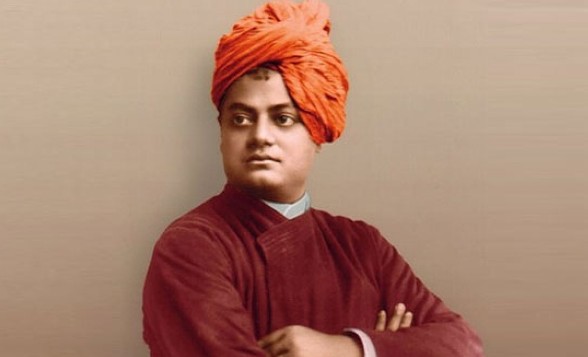
Today, 12 January, India remembers Swami Vivekananda — not only as a monk or philosopher, but as a thinker who reshaped the moral and spiritual self-image of a nation. His birth anniversary is observed as National Youth Day, underlining the fact that his ideas were meant not for isolation, but for engagement with life, society, and the future.
Born in 1863, Vivekananda lived a short but intensely impactful life. In less than four decades, he articulated ideas that continue to influence how India understands strength, spirituality, service, and self-respect. For him, religion was not escape, but energy; not fear, but courage.
From a Wandering Monk to a National Voice
Before global recognition came his way, Vivekananda travelled across India as a wandering monk, often hungry, often ignored, but always observant. These journeys exposed him to the everyday realities of colonial India — poverty, social divisions, and loss of confidence among the masses. From these experiences emerged his conviction that India’s weakness lay not in spiritual poverty, but in the erosion of self-belief.
His transformation into an international figure began at the Parliament of the World’s Religions. Standing before a global audience, he spoke not in defence of India, but with confidence in its spiritual heritage. His message of harmony among religions and respect for diversity instantly resonated, turning him into a global ambassador of Indian thought.
The Himalayas and the Making of a Philosophy
Away from public applause, Vivekananda repeatedly sought silence in the Himalayas, especially in the Kumaon region. Places like Almora and Kasar Devi offered him solitude where ideas could mature without interruption. These were not retreats from responsibility, but preparatory grounds for action.
In the quiet of forests and caves, his belief in Advaita — the oneness of existence — became more than philosophy. It evolved into a moral framework. If all life is one, exploitation becomes violence, and service becomes worship. This idea formed the backbone of his social vision.
Youth, Strength, and Fearlessness
Vivekananda placed extraordinary faith in the youth. He believed that young people carried the strength required to rebuild a society weakened by centuries of stagnation and colonial rule. His call was not for passive spirituality, but for strength of body, mind, and character.
He rejected narrow religiosity and empty ritual, arguing that character and courage mattered far more. That is why his words continue to resonate with young people facing uncertainty, pressure, and identity struggles even today.
Beyond Rituals and Remembrance
Observing Vivekananda’s birth anniversary cannot be limited to ceremonies and speeches. His life demands introspection. Are we fearless in thought? Are we compassionate in action? Are we inclusive beyond slogans?
Vivekananda did not ask India to imitate others or romanticise the past. He envisioned a nation rooted in ethical spirituality while embracing modern knowledge and scientific temper.
A Voice That Still Speaks
On this 12 January, Swami Vivekananda remains more than a historical figure. His ideas continue to question complacency and inspire courage. In classrooms, in moments of self-doubt, and in collective social struggles, his voice still urges strength, clarity, and service.
Remembering him today is not merely about honouring a birth date, but about renewing a commitment — to live without fear, to serve without discrimination, and to believe in the higher potential of human life.